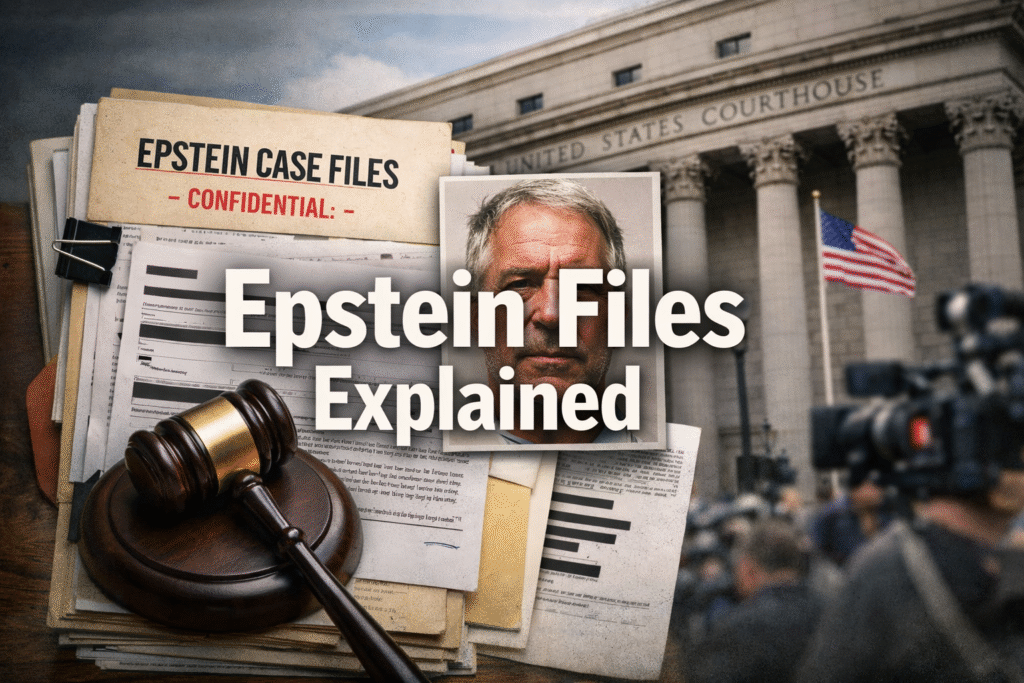
Epstein Files Explained is a subject that has returned to the center of global discussion following the release of newly unsealed court documents related to Jeffrey Epstein. These documents have sparked renewed debate about transparency, accountability, and the influence of powerful networks. While the files reveal associations and references, they do not automatically prove criminal wrongdoing. Still, unanswered questions continue to draw worldwide attention.
Who Was Jeffrey Epstein?
Jeffrey Epstein was an American financier who faced serious allegations related to sex trafficking and the abuse of minors. His arrest and subsequent legal proceedings attracted global attention due to his connections with wealthy and influential individuals across politics, business, and society.
In 2019, Epstein died in jail while awaiting trial. His death ended the criminal case but raised further concerns, as many felt critical questions would now remain unanswered. This moment marked the beginning of intense public scrutiny that continues today.
Epstein Files Explained: What the Court Documents Actually Contain
Epstein Files Explained refers to a collection of official legal records rather than a single document. These materials originate primarily from civil lawsuits and court proceedings, including cases involving Epstein’s associate Ghislaine Maxwell.
The Epstein Files include:
- Court filings and sworn testimonies
- Depositions from witnesses
- Email and communication references
- Contact lists and contextual mentions
These documents aim to provide legal context and background. Importantly, appearing in these files does not equal guilt. Many names appear due to indirect references, professional interactions, or witness statements rather than proven criminal activity.
Why Are So Many Names and Details Redacted?
One of the most debated aspects of Epstein Files Explained is redaction. Redaction means certain names or details are intentionally hidden from public view.
Courts use redactions to:
- Protect the identities of victims
- Follow privacy and defamation laws
- Prevent harm from unverified allegations
While legally justified, redactions often lead to public frustration. Many readers question whether full transparency is being delayed or denied, especially in a case involving significant power and influence.
Do the Epstein Files Prove Crimes by Powerful People?
A critical point in Epstein Files Explained is understanding what the files can and cannot prove. These documents alone do not establish criminal guilt. Legal proof requires verified evidence, judicial review, and formal court rulings.
Being named in the Epstein Files may simply indicate:
- Social or professional contact
- Attendance at the same events
- Mention by a third party
Without direct evidence, such references are not legal conclusions.
Why Has Global Interest Grown Again?
The renewed focus on Epstein Files Explained reflects a broader concern about justice and accountability. Many people view this case as symbolic of larger systemic issues, such as unequal treatment under the law and the influence of wealth on legal outcomes.
As more documents are released gradually, public pressure continues to build for complete transparency and responsible disclosure.
Are Indian Politicians Mentioned in the Epstein Files?
At present, there is no verified or official evidence confirming involvement of Indian political leaders in the Epstein Files. Claims circulating on social media are often misleading or unsupported by court records. Responsible analysis requires reliance on verified legal documents rather than online speculation.
Why the Epstein Files Story Is Still Ongoing
Epstein Files Explained remains relevant because the case never reached full legal resolution. Epstein’s death, ongoing redactions, and partial disclosures mean that many questions remain unanswered.
For many observers, this case now represents more than one individual. It highlights the importance of transparency, accountability, and equal justice in systems that involve power and influence.
Conclusion
Epstein Files Explained provides essential context to one of the most widely discussed legal controversies in recent history. While the released court documents offer insight into Jeffrey Epstein’s associations, they do not serve as automatic proof of guilt for those mentioned. What they do reveal is the importance of relying on facts, verified evidence, and responsible interpretation.
As long as information remains partially hidden and questions remain unresolved, interest in the Epstein Files will continue. Understanding the topic clearly and objectively is the only way to approach it responsibly.
For background information, the Jeffrey Epstein case has been widely documented through official court proceedings and public records. Detailed historical context about the case and legal timeline can be found on Wikipedia’s Jeffrey Epstein overview, which summarizes verified information and court-related developments.
For more fact-based explainers and in-depth articles, visit our About
Us page to understand our commitment to unbiased and verified content.